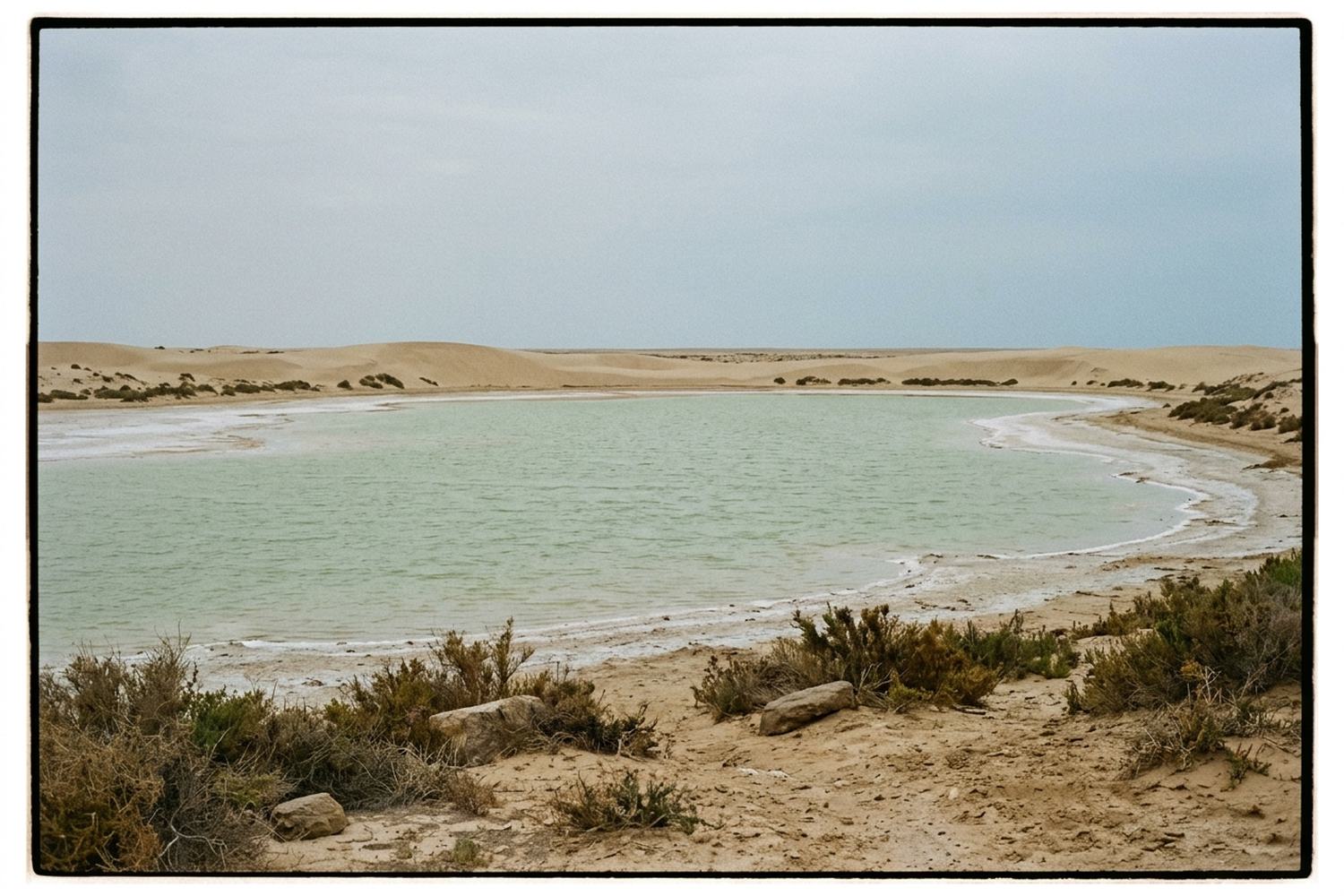
all of it | 7 nights | from $5,240 per person
Whale Season and the Baja Lagoons Vacation Package
Seven nights on the Baja lagoons vacation package, and the whole point of it, close boat time with gray whales in the calving lagoon, hangs on a wind that shuts the water down for days at a time.
What all of it means here
You are going for one thing. Seven nights of desert and salt water are pleasant on their own, but nobody crosses a continent for the salt flats. The week is built around a small open boat, and that boat stays on the beach when the north wind gets up. Close the lagoon and you close the reason for the trip. The camp still runs and the food still comes out. The whales are two miles off behind a wall of chop, and you watch the water from a folding chair.
- What the weather can cancel
- The boat outings. Twelve of them are scheduled across six days, and when the north wind holds the crews keep the boats on the beach. From shore the whales are a distant spout, if that.
- How often it actually happens
- In February and March about one outing in four is canceled for wind, and a stretch of three closed sessions in a row happens roughly once every two weeks. Rain has nothing to do with it: the shore takes under four inches a year.
- What you do instead
- The boats sit and the day goes to land: the salt flats, the mangrove edge on foot, the road up to the mission town. Nobody adds an extra boat day later, because permits are counted per camp and per week.
- What money comes back
- No money comes back. Boat days and permits are paid to the local cooperative for the block of dates whether the water opens or not, and the camp holds your nights either way. We take nothing from you, so we have nothing to return.
- Who should not book this
- Anyone with exactly these seven days and one chance at them. If seeing a whale close enough to touch is the condition for the week counting as a success, this is the wrong way to buy it.
The fourth row is the one this trade prints smallest, and on most of these trips it says nothing comes back. It stands above the price deliberately.
What the $5,240 pays for
- Seven nights in a tent cabin on the lagoon shore, two sharing, canvas walls and a wood floor, about 30 feet from the tide line
- Two permitted boat outings a day for six of the seven days, morning and afternoon, around 18 hours on the water if every one of them runs
- All meals at camp, cooked on site, plus drinking water carried in by truck
- Lagoon permit fees and the licensed boat handler, both fixed by the local cooperative that holds the concession
- Road transfer from the nearest airstrip, about two and a half hours, most of it unpaved
- A naturalist with the group all week, not a rotating one
What the figure does not pay for
- Flights into the country and the domestic connection down the peninsula, priced on their own once we know where you start
- The night before and the night after in a coastal town, since the transfer leaves early and lands late
- Travel insurance, which we do not arrange and do not advise on
- Alcohol, tips to the boat crews, and anything bought in the village
- The single occupancy supplement, currently $890 for the week
What it costs
from $5,240 per person
- Covering
- 7 nights, small-boat whale watching from a lagoon camp.
- Taken as read
- A room shared between two, except where any of the six otherwise for your case.
- What lifts it
- A crowded month, a better room, a decision left late, and every hour you hand to somebody else to arrange.
- When it stops moving
- The moment an operator signs its own name under it. Before that, read it as the floor of a spread this desk has actually seen.
You settle with the operator, through whatever system they run. Not a cent of it passes through here, and this office never sees a card.
The months that hold whales, and the months that hold wind
Mid-January to late March is the window. Cows and calves are in the lagoon from about the second week of January, numbers peak from mid-February through the first week of March, and by the second week of April the lagoon is close to empty. Outside those weeks there is no trip to sell you, so we do not run one.
Rain is not what stops the boats. The lagoon shore takes under four inches of rain in a year, and almost none of it falls in winter. Wind does the damage. From late morning the northwest breeze builds, and once it holds above 15 knots the shallow water stands up into short chop that the boat handlers will not take a group into. Afternoon outings are lost about twice as often as morning ones.
Two stretches I would talk you out of. The first ten days of January, because the count is still low and you can spend a week looking at three animals. And anything after March 25, when the whales are thinning and the spring wind is at its most persistent, which is the pairing that costs people the whole week.
What is settled when you confirm
Four things on the Baja lagoons vacation package wait until the booking goes in: which of the two lagoons you are placed on, since permits are allocated by camp and by week; whether your nights run Saturday to Saturday or mid-week, which moves the road transfer by about an hour; the domestic leg, and whether you overnight before it; and whether you take the tent line on the water or the hard-roofed room set back from it, which is quieter and colder.